Start.
I started off at Baylor University (Sic ’em Bears) with grandiose dreams of being a doctor. But life has a funny way of redirecting you. The summer before my junior year, my father went in for routine back surgery and it went wrong. Coma. Brain damage. It was a year before he could walk. It was about a five-year recovery to his “new norm.” He and my mom had run a small payroll company in San Antonio since 1974 called Dial-A-Check (yes, that is correct), and I’m an only child. So much for medical school.
I switched to computer science, because Dad had written the company’s software and I’d been coding for him since high school. As a science major, I figured the business school was for people who couldn’t hack the science building. I was about to run a business and had no idea what one was, so I got an accounting degree anyway. I rounded that off with a statistics minor for nostalgia because I was only three classes away, it was Dad’s field, and I didn’t know yet if he was going to make it.
I showed up in May 1994. Six loyal employees. Revenue down 60 percent and months of losses. Half the clients gone, because our biggest competitor had been calling them one by one to say the owner was on his deathbed and they’d better switch (those in the industry know which three red letters I’m talking about). My mom tossed me the office keys, said “Don’t f— it up,” and went home to take care of my dad. No 20-year-old wants to work for his parents, but it was the best thing that ever happened to me. When you’re working for something bigger than yourself, you don’t need a motivational video.
Build.
For five years I worked ten-plus hours a day, seven days a week. We dragged an industry that was still running on DOS and Unix, and in no hurry to leave them, into Windows, SQL and the internet. Creating a software company adjacent to the payroll company is how I made my new payroll career “cool.” We focused on software for payroll service companies. Within five years we were a top-three software provider in the industry. I was building recurring revenue before I knew why it mattered.
And yes, we changed the name.
Historically our software targeted smaller employers. In the 2005-2010 period, we went upmarket, after the one or two giants that owned the mid-market. Another huge success. Around 2010 we hit our next home run with white-label payroll. Hundreds of companies white-labeling our products and services for their clients. Accounting firms, merchant processors, banks, anyone that wanted to serve the employer. We had household names like BBVA, Sam’s Club, BambooHR, Beyond, Deel, and many more. That was our focus through most of the 2010s.
In 2019 I had an opportunity to make our first acquisition, a payroll company out of Boston. Over the next five years I bought a total of ten companies. No private equity. No outside investors. Cash first, then plain bank debt, and it was still cheaper than winning those customers one at a time.
30 years. 24x growth. Twenty-two straight years of double-digit growth. Two Entrepreneur of the Year finalist awards and multiple years on the Inc. 5000.

The other thing I built was a family, and it got the same effort. I met my wife in 1996, when she was a client. We married on Cozumel in 2001 and had two boys. Once they arrived, the weekends were theirs and I did my best to get home at a reasonable hour.
Between the two of them I coached 21 seasons of soccer and basketball and spent three years as a scoutmaster.
After the coaching years came lacrosse, for their school and for club teams that traveled coast to coast. I watched more than 500 of those games, most of them from behind a camera, and I have over 200,000 photos to prove it. At their school, everyone from the security guard to the dean knew me on sight.

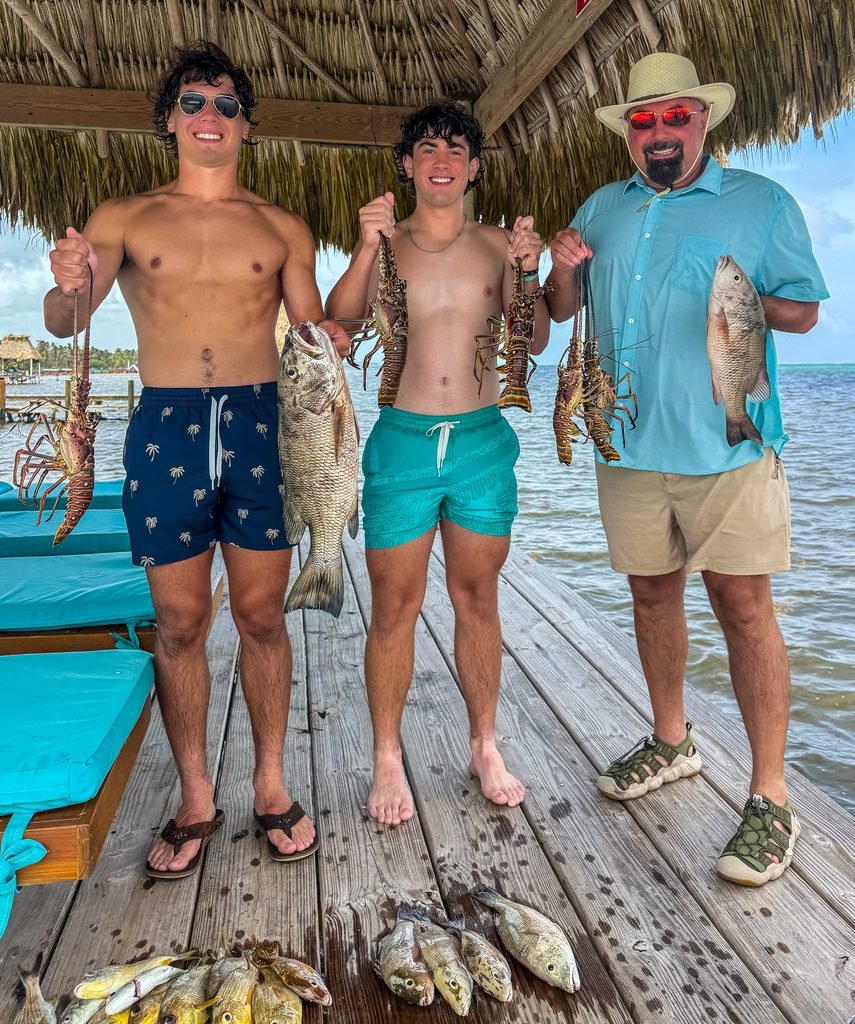
We put the same energy into travel, because we wanted them to appreciate experiences over stuff. We avoided concrete vacations (walking around a city); we wanted activities: skiing, scuba diving, mountain biking, hiking, fishing, spearfishing…you name it we did it.
Finish.
You only sell your company once, so it’s difficult to practice. Instead, I was a student of the game. For 20 years I tracked every deal in our industry, public and private. I figured out who was paying the highest multiples and why. I learned who would find the most value in us. Buyers called almost weekly for years. I took a few of them every year deep enough into the process to learn what they wanted and where we came up short, and I kept sharpening the pitch.

By 2020 every other player our size had sold to private equity or a public company. We called ourselves the last of the Mohicans, and we said so in the pitch deck. We didn’t run a normal process and we didn’t hire a banker. We hand-picked a few suitors and ran the process our way. In June 2024 I sold 100 percent, on our terms, at multiples in the top 5 percent of our industry’s history. Every employee got a piece, many in the seven-figure range.
The deal was the easy part. For 30 years that company was my identity, and every decision in it was mine. I still work there, by choice, but it belongs to someone else now. I went from owning the place to having a job description. Nobody on the deal team warns you about that part.
Today, most of my time is spent on the M&A team buying companies in the industry I’ve been in for over 30 years. To date, I’ve done 18 transactions as the buyer and one as the seller. Few people in our industry have had the fortune or experience of sitting on both sides of that table.
Live.
My wife and I were married on an island and now we’re building our dream home on another island, in Belize. I split my time between there and Texas. I’m a serial entrepreneur and I can’t help it: real estate, a few boards, mentoring college students, and always a business plan or two in the drawer. I also fish, dive, run my boat, and work on slowing down, which is harder than anything in the paragraphs above.

What you’ll find here
- Two Cents from the Trenches: lessons for owners, from growing a company to finishing well.
- You’ll Thank Me Later: what I wish I’d known between 17 and 30, and the advice I’d give my boys.
- Life on the Caye: island life, and learning to enjoy what the work was for.
The last part, living well, I’m still learning myself. Come along for the ride.